
EDITORIAL FIELD GUIDE · PLAYBACK METROLOGY

Stylus Wear
Anatomy

Vinyl playback relies on a destructive premise: dragging a microscopic diamond through a PVC trench. Even perfectly calibrated tonearms generate immense localized friction. Over hundreds of hours, that friction alters the diamond’s geometry.

Understanding stylus wear isn't just about chasing fidelity; it’s about protecting the physical medium. A worn stylus acts like a lathe, permanently shaving high-frequency modulations right out of your records.

800–1000 Hrs Diamond Lifespan
3 Min Read Time
Optical Metrology Inspection Standard
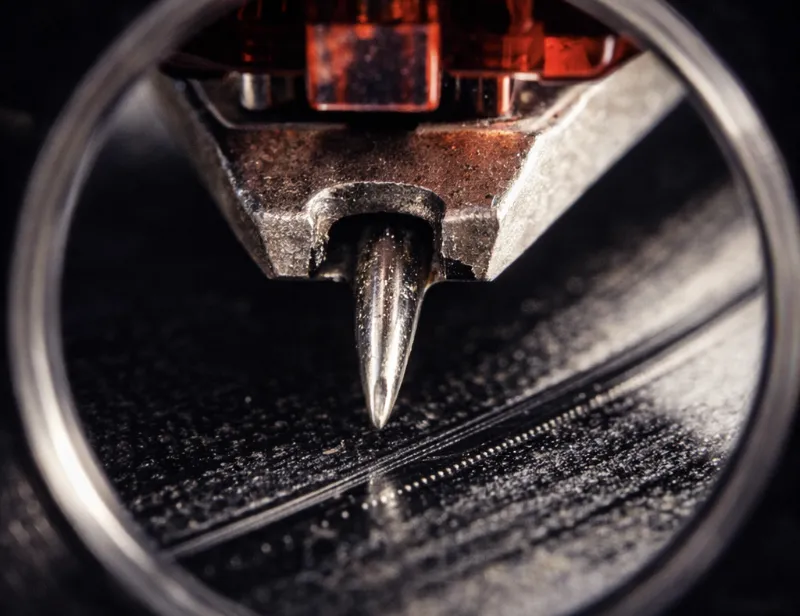
High resolution optical magnification inspection of phono cartridge diamond stylus tip
Stereo microscope bench evaluating diamond contact patches and cantilever alignment
01

The Metrology of a Worn Diamond

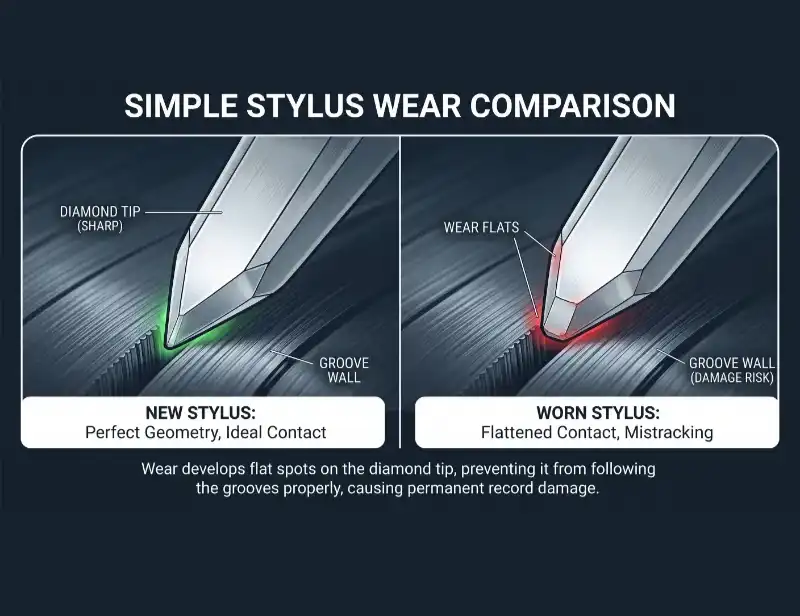
Geometry Shift: Sustained pressure and heat transforming tracing instruments into sharp chisels.
Chisel Risk: Severe

A fresh stylus traces the groove walls using specific, microscopic contact patches. As the record spins, sustained pressure and heat polish these patches into flat spots.

When these flats exceed the original profile specification, the stylus morphs from a tracing instrument into a chisel. Instead of riding the undulations of the groove smoothly, the widened diamond carves its own path.

Extreme Localized Physics

Even at a gentle 1.8 grams of tracking force, the minute surface area of a diamond contact patch generates pressures exceeding several thousand pounds per square inch, accompanied by instantaneous friction temperatures over 300°F.
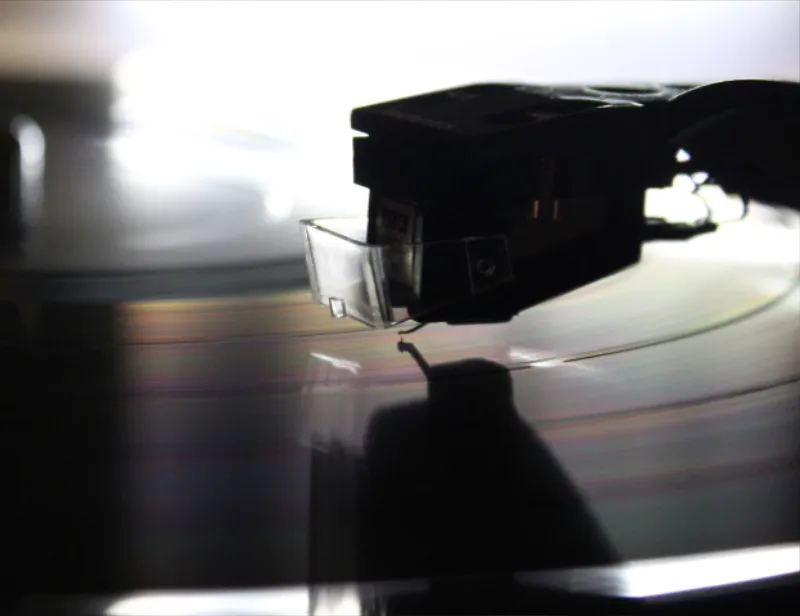
Vinyl microgroove wall damage caused by listening through a worn out diamond needle
02

Why Inspection Beats Listening

The Trap: Hearing distortion means groove damage has already taken place.
Groove Loss: Irreversible

Many listeners wait for audible symptoms—sibilance, high-frequency roll-off, or harsh inner-groove distortion (IGD) before replacing a cartridge. By the time your ear detects that spiky distortion on a vocal track, the damage to the record is permanent. The high frequencies are gone.

This is where playback metrology comes in. Using magnification allows us to evaluate the contact patches objectively before the damage occurs. We are looking for asymmetrical reflections of light hitting the flat spots, indicating uneven wear or anti-skate misalignment.

The shape of your stylus dictates how fast it wears and how critical inspection becomes. The more complex the profile, the longer the lifespan, but the tighter the alignment tolerances.

Surface scuffs and microscopic abrasive dust buildup on vinyl grooves
03

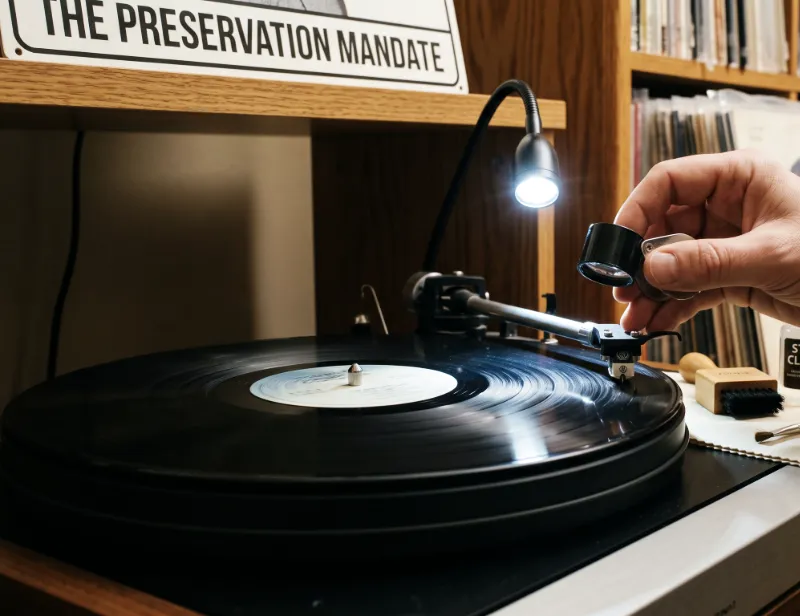
The Preservation Mandate

Preventive Care: Strict hygiene, abrasive sludge elimination, and retip economics.
Solution: Optical Audit

Routine visual inspection and strict stylus hygiene, removing microscopic debris before it acts as an abrasive paste extend the life of the diamond. But more importantly, they guarantee your rare pressings survive the playback process intact. The cost of a retip is always a fraction of the cost of replacing damaged vinyl.

Have Your Stylus Examined at The Wax Lab

Our optical diagnostic service provides microscopic imaging of tip wear, cantilever azimuth alignment, and bonded diamond integrity. Explore our Stylus Inspection Service.

PROTECT YOUR VINYL INVESTMENT

SCHEDULE AN OPTICAL STYLUS AUDIT

Unsure how many playback hours remain on your cartridge? Send your headshell or cartridge to our Green Bay laboratory for microscopic diagnostics and ultra-clean sonic evaluation.

Explore Stylus Inspection